• About Us
  • Writers
  • Media Gallery
  • Contact Us
Tuesday, June 23, 2026
No Result
View All Result
JOIN OUR NEWSLETTER
Cari-Bois Environmental News Network
26 °c
Port of Spain
  • Home
  • Agriculture
  • Pollution
  • Climate Change
  • Mining
  • Oil & Gas
  • Forestry
  • Fishing
  • Wildlife
  • Governance
  • More
    • Natural Disaster
    • World Wildlife Day
  • Home
  • Agriculture
  • Pollution
  • Climate Change
  • Mining
  • Oil & Gas
  • Forestry
  • Fishing
  • Wildlife
  • Governance
  • More
    • Natural Disaster
    • World Wildlife Day
No Result
View All Result
Cari-Bois Environmental News Network
No Result
View All Result
Home Climate Change

Tobago’s corals and Trinidad’s swamps under climate threat

by Cari-Bois Youth Journalists
April 25, 2025
in Climate Change
0
Tobago’s corals and Trinidad’s swamps under climate threat
0
SHARES
234
VIEWS
Share on FacebookShare on LinkedInShare on Whatsapp

During the second term of the 2024/2025 Academic Year, Cari-Bois partnered with the Scotiabank Foundation to empower ten (10) students with climate journalism skills as part of the third edition of Cari-Bois’ Youth Journalism Project. For their third assignment, students wrote an article about the effects of climate change on biodiversity. This story was written by Amelia Puttin of Brazil Secondary School.

Trinidad and Tobago is home to a wide variety of biodiversity, like Tobago’s coral reefs and Trinidad’s Caroni Swamp.

Both ecosystems rely on certain environmental conditions in order to strive and flourish.

These conditions include specific temperatures, sunlight and water quality.

But climate change now threatens the existence of these beautiful ecosystems as environmental conditions change and affect the balance in these ecosystems, which can make them become more unfavourable for maintaining life.
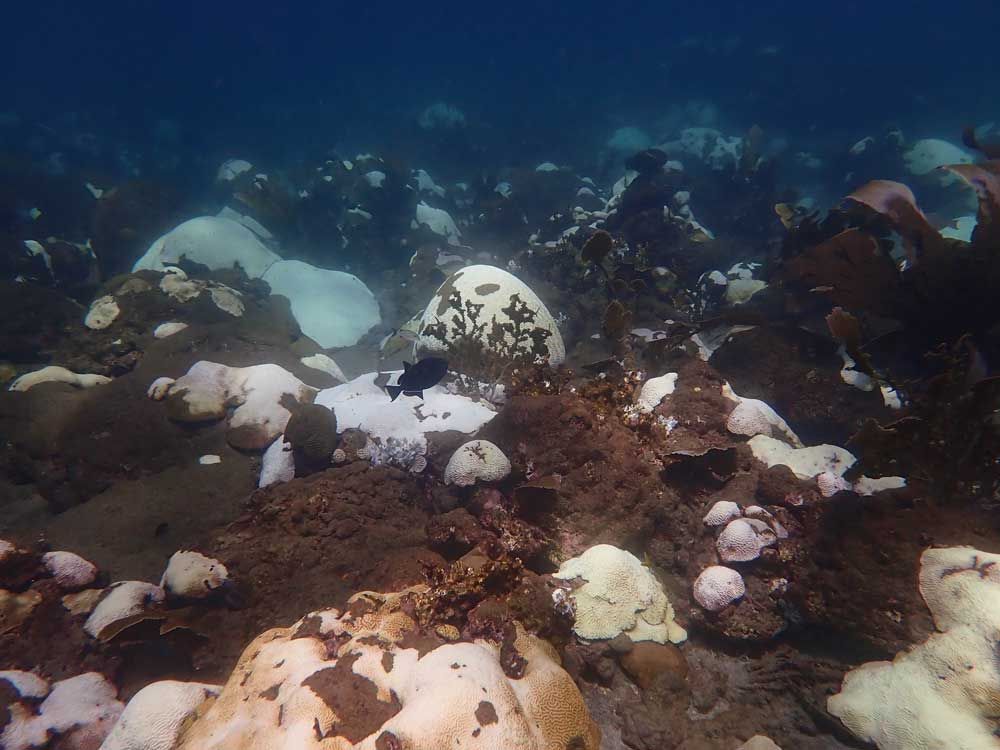
In November 2024, the Institute of Marine Affairs (IMA) reported that Tobago was at a Coral Bleaching Alert Level 5—the highest level of concern. Key sites like Buccoo Reef, Castara, Culloden, and Mount Irvine had over 80% coral bleaching, with some critical species showing up to 95–100% impact due to record-breaking sea temperatures since August 2024. (Information and Photo Courtesy the Institute of Marine Affairs)

Buccoo Reef

Located in Buccoo, Tobago, the Buccoo Reef is a popular tourist attraction.

This reef is home to an estimated 119 species of fish and an abundance of corals, including the “Dead Man’s Finger”, brain corals and staghorn corals.

In the Buccoo Reef, you can also find stingrays and shellfish like lobsters and clams.

But while the reef is teeming with life, recent observations have shown that corals are dying due to coral bleaching.

Coral bleaching is a result of climate change, which causes the sea water to be warmer than usual.

This change in temperature stresses the corals, which causes them to release the algae (zooxanthellae) that lives in their tissues.

In November 2024, the Institute of Marine Affairs (IMA) reported that Tobago was at a Coral Bleaching Alert Level 5—the highest level of concern. Key sites like Buccoo Reef, Castara, Culloden, and Mount Irvine had over 80% coral bleaching, with some critical species showing up to 95–100% impact due to record-breaking sea temperatures since August 2024. (Information and Photo Courtesy the Institute of Marine Affairs)

When this algae is released, the corals die and leave a white skeletal structure.

With corals providing shelter and food to many organisms within this ecosystem, like the parrot fish and shellfish, many of these organisms die or leave when corals bleach, which can collapse reefs and disrupt their wellbeing.

Caroni Swamp

The Caroni Swamp is an ideal bird watching destination as it contains over 150 species of birds including; Trinidad and Tobago’s national bird, the Scarlet Ibis, monkeys, the Anteater, Capybaras, raccoons, oysters, clams and many species of fish. 

But due to the rising sea levels caused by the effects of climate change, the swamp is now experiencing saltwater intrusion.

Tour guides at the Caroni Swamp are observing increasing numbers of Charru Mussel which is globally known as an invasive species. Further scientific research is needed to know if the mussels are in fact Charru Mussels, why they are increasing in numbers and how they are affecting the Swamp’s ecological integrity.

This excess salt water now creates an imbalance in the water quality which causes some species to migrate, some to adapt and others to die.

Plants in the swamp are also affected by saltwater intrusion, and some die because of the high concentration of saltwater.

Heavy rains due to climate change are another threat presented to the swamp.

Over the past several years, the swamp has experienced noticeable levels of erosion which have resulted in mangrove loss.

This development is concerning, as the mangrove is home to countless organisms that depend on them for life.

The wellbeing of Trinidad and Tobago’s biodiversity relies heavily on the country’s ability to slow the acceleration of climate change.

A very special thank you to the Scotiabank Foundation for supporting the development of young people through initiatives like the Cari-Bois Youth Journalism Project.

Tags: Climate ChangeGen ZTrinidad and TobagoYouthYouth Journalism
Cari-Bois Youth Journalists

Cari-Bois Youth Journalists

In the 2024/2025 academic year, Cari-Bois will work closely with ten secondary schools across Trinidad and Tobago to empower a total of 20 students with journalism skills and climate knowledge. With funding support from the Scotiabank Foundation, the project aims to challenge each student to write and publish three climate stories to raise awareness about the effect of the climate crisis on their communities and beyond. The project’s stories are set to be published under a special social media campaign titled the “Green Gazette” that will be shared across the social media platforms of Cari-Bois.

Next Post
Tobago’s corals and Trinidad’s swamps under climate threat

How Climate Change is Affecting Trinidad and Tobago’s sensitive species 

Explore by Region

  • Caribbean
  • Antigua and Barbuda
  • Barbados
  • Belize
  • Guyana
  • Haiti
  • Jamaica
  • St Vincent
  • Suriname
  • Trinidad
  • Tobago
  • World
Facebook Twitter Youtube RSS

About Us

Cari-Bois is a Caribbean-wide community that brings together communities, academic, scientists, and journalists, to further educate the region about present-day environmental issues which affect the wellbeing of the region’s natural resources and livelihoods.

Article Categories

  • Agriculture
  • Climate Change
  • Fishing
  • Forestry
  • Mining
  • Natural Disaster
  • Oil & Gas
  • Policy & Governance
  • Pollution
  • Special Reports
  • Wildlife
  • World Wildlife Day

Supported under the 'Caribbean Natural Capital Hub' of ANSA Merchant Bank and ANSA Bank. Learn more here.

© 2024 Caribois Environmental News Network. All Rights Reserved. | Privacy Policy
The contents of this website are the sole responsibility of the project partners and can under no circumstances be regarded as reflecting the position of the European Union.

Welcome Back!

Login to your account below

Forgotten Password?

Retrieve your password

Please enter your username or email address to reset your password.

Log In

Add New Playlist

No Result
View All Result
  • Home
  • Explore By Category
    • Agriculture
    • Climate Change
    • Fishing
    • Forestry
    • Mining
    • Oil & Gas
    • Policy & Governance
    • Pollution
    • Wildlife
    • Natural Disaster
    • Special Reports
    • World Wildlife Day
  • Explore by Region
    • Caribbean
    • Antigua and Barbuda
    • Barbados
    • Belize
    • Guyana
    • Haiti
    • Jamaica
    • St Vincent
    • Suriname
    • Trinidad
    • Tobago
    • World
  • Media Gallery
  • About Us
  • Contact Us

© 2024 Caribois Environmental News Network. All Rights Reserved. | Privacy Policy
The contents of this website are the sole responsibility of the project partners and can under no circumstances be regarded as reflecting the position of the European Union.