• About Us
  • Writers
  • Media Gallery
  • Contact Us
Monday, June 22, 2026
No Result
View All Result
JOIN OUR NEWSLETTER
Cari-Bois Environmental News Network
26 °c
Port of Spain
  • Home
  • Agriculture
  • Pollution
  • Climate Change
  • Mining
  • Oil & Gas
  • Forestry
  • Fishing
  • Wildlife
  • Governance
  • More
    • Natural Disaster
    • World Wildlife Day
  • Home
  • Agriculture
  • Pollution
  • Climate Change
  • Mining
  • Oil & Gas
  • Forestry
  • Fishing
  • Wildlife
  • Governance
  • More
    • Natural Disaster
    • World Wildlife Day
No Result
View All Result
Cari-Bois Environmental News Network
No Result
View All Result
Home Climate Change

Floods, droughts, heatwaves plague vulnerable Caribbean region 

by Cari-Bois Youth Journalists
April 16, 2025
in Climate Change
0
Floods, droughts, heatwaves plague vulnerable Caribbean region 

Damaged sail boats washed ashore are seen in the aftermath of Hurricane Maria in Fajardo, Puerto Rico, Thursday, September 21, 2017. Puerto Rico braced for potentially calamitous flash flooding after being pummeled by Hurricane Maria which devastated the island and knocked out the entire electricity grid. The hurricane, which Puerto Rico Governor Ricardo Rossello called "the most devastating storm in a century," had battered the island of 3.4 million people after roaring ashore early Wednesday with deadly winds and heavy rain. (Photo Courtesy RICARDO ARDUENGO/AFP)

0
SHARES
556
VIEWS
Share on FacebookShare on LinkedInShare on Whatsapp

During the second term of the 2024/2025 Academic Year, Cari-Bois partnered with the Scotiabank Foundation to empower ten (10) students with climate journalism skills as part of the third edition of Cari-Bois’ Youth Journalism Project. For their second assignment, students wrote an article about the relationship between climate change and natural disasters. This story was written by Ananyah Matthews of Brazil Secondary School.

Extreme weather events are weather phenomena that are unusually severe, changing significantly from the normal conditions for a particular region and time of year. 

In simpler terms, extreme weather is any weather that is unusual or unexpected. 

But how does climate change contribute to that? 

Climate change is intensifying and increasing the frequency of extreme weather events. 

Warmer temperatures mean that the atmosphere can hold more moisture, leading to heavier rainfall and more intense storms.

As the planet’s climate continues to shift, so does the weather patterns throughout the planet. 

In the Caribbean, the effects of climate change are noticeable.
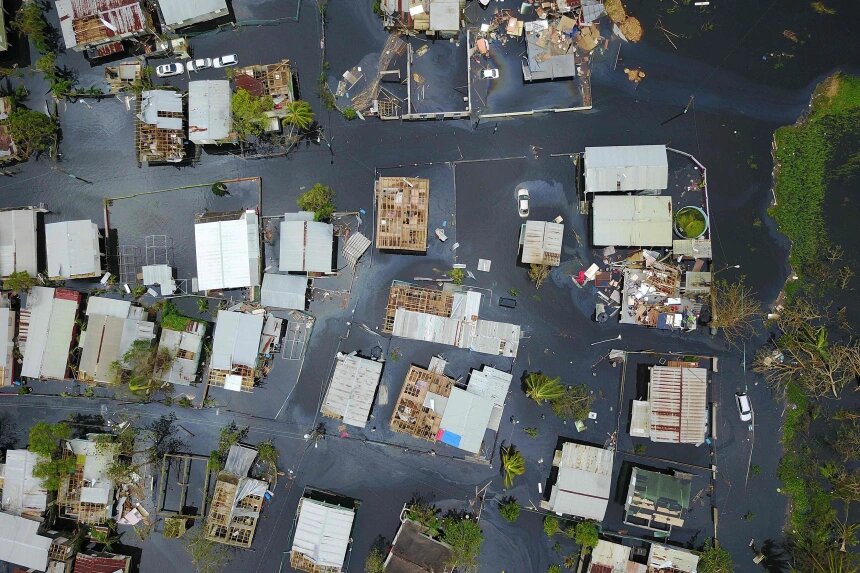
An aerial view of the flooded neighborhood of Juana Matos after Hurricane Maria in Cataño, Puerto Rico, on Sept. 22, 2017. (Photo Couresty Ricardo Arduengo / AFP)

Heatwaves are becoming more frequent, longer, and more intense, leading to an increase in heat-related illnesses and deaths. 

Droughts are more frequent, severe and prolonged, impacting water resources, agriculture, and ecosystems. 

Drier conditions and warmer temperatures create more fuel for wildfires, which can spread rapidly and cause widespread destruction.

In contrast, floods are more intense due to heavier rainfall and rising sea levels increasing the risk of damage and displacement. 

Lastly storms, warmer ocean temperatures can fuel stronger hurricanes and cyclones, leading to increased storm intensity and destruction. 

All these events have the potential to impact human health. 

Unfortunately, this pattern is projected to intensify in the foreseeable future. 
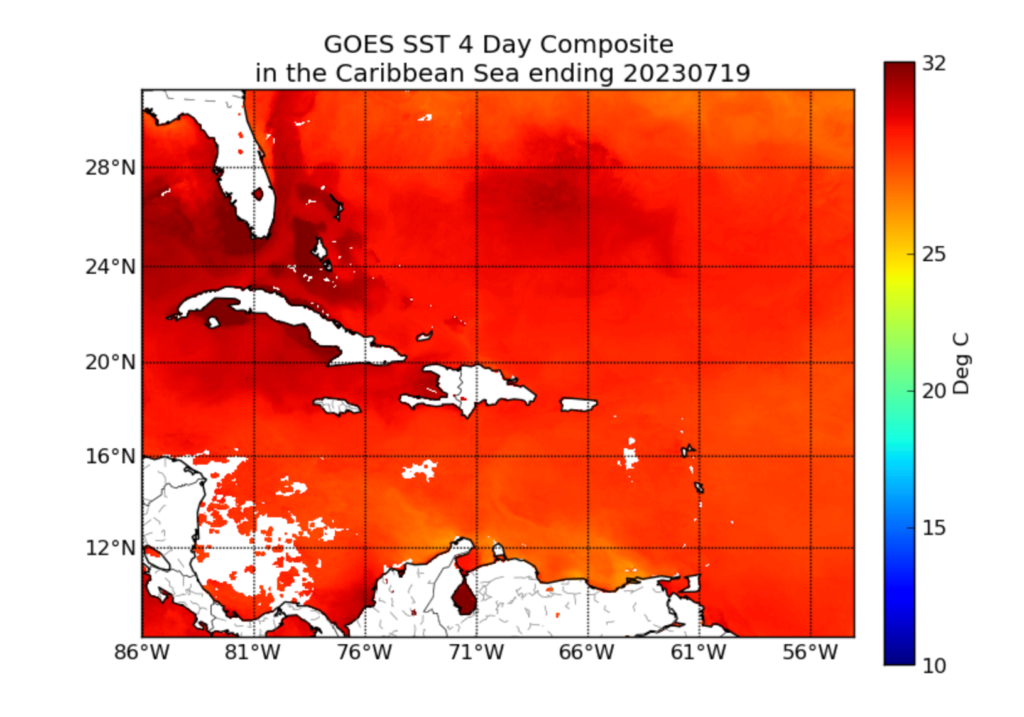
In 2023, the Caribbean Sea faced a record heat wave which posed a severe threat to coral reef health and survival. (Photo Courtesy Ocean Prediction Center/NOAA)

Since the 1970s people’s actions have been contributing to this issue. 

One of the main offenders is the burning of fossil fuels, which adds greenhouse gases to the atmosphere. 

Carbon dioxide, methane, nitrous oxide, and fluorinated gases are all greenhouse gases which trap heat in the atmosphere.

DROUGHT

Drought is a prolonged dry period in the natural climate cycle that can occur anywhere in the world. 

It is a slow-onset disaster characterized by the lack of precipitation, resulting in a water shortage. 

Drought can have a serious impact on health, agriculture, economies, energy and the environment. 
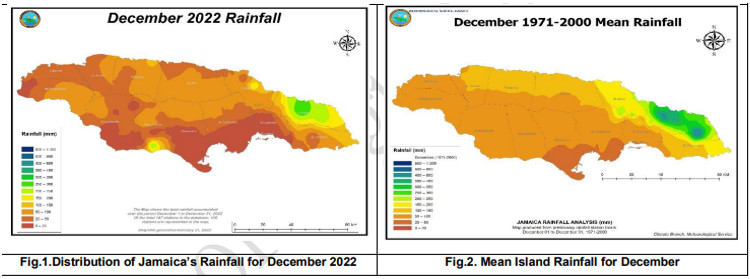
In October 2022 to March 2023, Jamaica received cumulatively the lowest rainfall ever for this period since records have been kept. (Map Courtesy Jamaica’s National Water Commission)

Several Caribbean countries, such as Barbados, Antigua and Barbuda, and St. Kitts and Nevis are considered water-scarce and frequently experience drought conditions due to limited freshwater resources. 

The region’s need for rainwater to hydrate their agriculture makes it vulnerable to constant changing weather patterns. 

There are several strategies which can be used to address this issue, these include harvesting rainwater leaving out barrels to catch it and drip irrigation.

FLOODS

Islands such as Trinidad and Tobago, Jamaica, Haiti, the Dominican Republic, Barbados, and Dominica experience extreme flooding.

Back in November 2023, the Dominican Republic was hit with unpredictable rainfall with up to 431mm recorded in some areas, this led to severe flooding and landslides.

This catastrophe resulted in at least 21 fatalities and thousands displaced. The capital, Santo Domingo, was particularly affected. 

A photo of the damage left in Havana, Cuba, after Hurricane Irma made landfall in 2017.

Recent reports indicate that Trinidad and Tobago has been experiencing more significant flooding in recent years. 

Some areas, such as Penal, have been faced with the worst flooding in decades.

In November 2024, the Trinidad and Tobago Meteorological Service placed the country under a yellow-level adverse weather alert, from 1.30 pm to 6 pm due to what it said was “a very moist and unstable atmosphere.” 

It said this could result in rainfall totals up to 50 millimetres and winds in excess of 55 kilometres per hour. 

Included in the forecast were warnings of street and flash flooding and landslides. 

This was a very serious warning and could have had disastrous effects. 
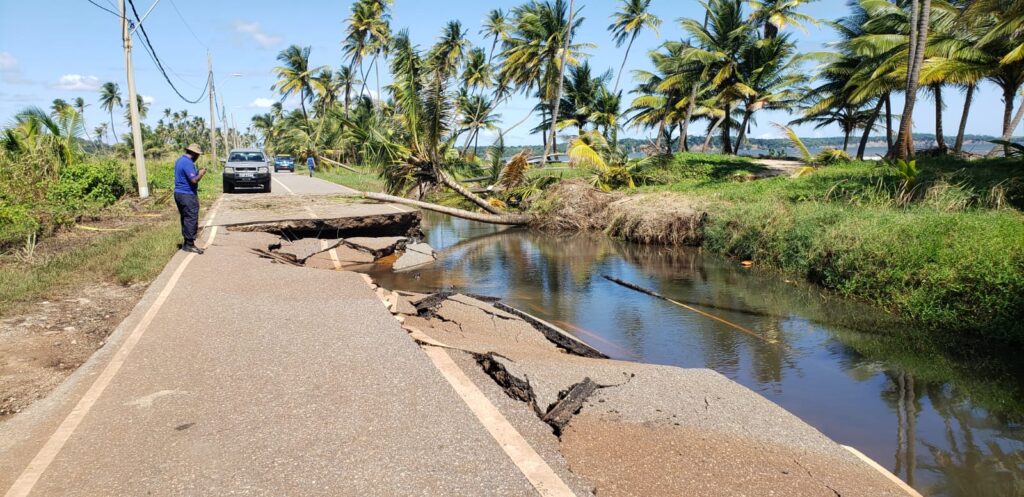
On Tuesday 6th December, 2022, Trinidad and Tobago’s Office of Disaster Preparedness and Management (ODPM) deployed a team to the Manzanilla-Mayaro area to conduct on-the-ground reconnaissance of the area’s Main Road that was destroyed after a flood. (Photo Courtesy The Office of Disaster Preparedness and Management)

Every citizen can do simple things which can mitigate against the possible consequences of such a warning. 

This includes maintaining drainage, reinforcing slopes with vegetation and retaining walls, and avoiding construction in high-risk areas. 

Floods and landslides are distinctive threats, and the measures for prevention can be local but often involve coordination across national borders.

HEATWAVES

Heatwaves are especially affecting the Caribbean now due to climate change. 

Puerto Rico, the US Virgin Islands, and Grenada have experienced record-breaking heatwaves in the past recent years.
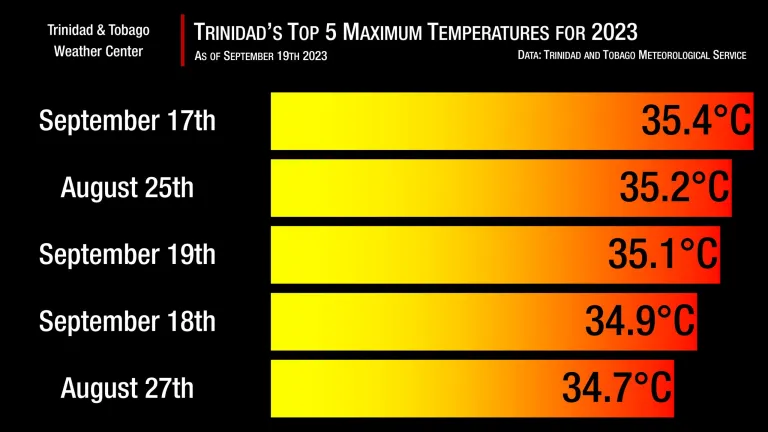
In August and September 2023, Trinidad and Tobago experienced record-breaking temepratures. (Graphic Courtesy the Trinidad and Tobago Weather Centre)

In June 2023, Puerto Rico experienced a record-breaking heatwave with heat index readings reaching as high as 125 degrees Fahrenheit. 

This contributed to many heat-related incidents whether it is illnesses, deaths or injuries. 

There are several simple ways to help with wildfires and heat waves such as disposing of cigarettes properly, having a long garden hose that can extinguish bushfires before they become too large and never burning grass when it’s windy as this can cause the fire to spread rapidly.

A very special thank you to the Scotiabank Foundation for supporting the development of young people through initiatives like the Cari-Bois Youth Journalism Project.

Tags: caribbeanClimate ChangeGen ZYouthYouth Journalism
Cari-Bois Youth Journalists

Cari-Bois Youth Journalists

In the 2024/2025 academic year, Cari-Bois will work closely with ten secondary schools across Trinidad and Tobago to empower a total of 20 students with journalism skills and climate knowledge. With funding support from the Scotiabank Foundation, the project aims to challenge each student to write and publish three climate stories to raise awareness about the effect of the climate crisis on their communities and beyond. The project’s stories are set to be published under a special social media campaign titled the “Green Gazette” that will be shared across the social media platforms of Cari-Bois.

Next Post
Assessing the effects of climate change on Trinidad and Tobago’s Biodiversity 

Assessing the effects of climate change on Trinidad and Tobago’s Biodiversity 

Explore by Region

  • Caribbean
  • Antigua and Barbuda
  • Barbados
  • Belize
  • Guyana
  • Haiti
  • Jamaica
  • St Vincent
  • Suriname
  • Trinidad
  • Tobago
  • World
Facebook Twitter Youtube RSS

About Us

Cari-Bois is a Caribbean-wide community that brings together communities, academic, scientists, and journalists, to further educate the region about present-day environmental issues which affect the wellbeing of the region’s natural resources and livelihoods.

Article Categories

  • Agriculture
  • Climate Change
  • Fishing
  • Forestry
  • Mining
  • Natural Disaster
  • Oil & Gas
  • Policy & Governance
  • Pollution
  • Special Reports
  • Wildlife
  • World Wildlife Day

Supported under the 'Caribbean Natural Capital Hub' of ANSA Merchant Bank and ANSA Bank. Learn more here.

© 2024 Caribois Environmental News Network. All Rights Reserved. | Privacy Policy
The contents of this website are the sole responsibility of the project partners and can under no circumstances be regarded as reflecting the position of the European Union.

Welcome Back!

Login to your account below

Forgotten Password?

Retrieve your password

Please enter your username or email address to reset your password.

Log In

Add New Playlist

No Result
View All Result
  • Home
  • Explore By Category
    • Agriculture
    • Climate Change
    • Fishing
    • Forestry
    • Mining
    • Oil & Gas
    • Policy & Governance
    • Pollution
    • Wildlife
    • Natural Disaster
    • Special Reports
    • World Wildlife Day
  • Explore by Region
    • Caribbean
    • Antigua and Barbuda
    • Barbados
    • Belize
    • Guyana
    • Haiti
    • Jamaica
    • St Vincent
    • Suriname
    • Trinidad
    • Tobago
    • World
  • Media Gallery
  • About Us
  • Contact Us

© 2024 Caribois Environmental News Network. All Rights Reserved. | Privacy Policy
The contents of this website are the sole responsibility of the project partners and can under no circumstances be regarded as reflecting the position of the European Union.