Social media has shaped our lives in many different ways with one of the most notable being our consumption of material goods. Influencers have replaced shopping channels with their shopping hauls, promising you a discount if you use their specialised code to shop at the same store they did. This has helped to launch the fast fashion industry into the stratosphere.
Fast fashion, much like fast food, is cheap, widely available and lacks sustenance. In several instances, clothes are manufactured in unethical conditions for dirt cheap prices, sewn only to last a short period of time. This is one of the ways in which clothing brands are able to increase the number of collections made within a year. In 2000, European fashion brands would offer two collections a year, now they offer 5. Other brands offer even more. Zara offers 24 collections whilst H&M offers anywhere between 12 to 16 collections. The industry is expected to reach 3 trillion USD in sales by 2030.
Cheap prices would be appealing to anyone, however mass production at this scale is riddled with downsides.
Labor cost
These days it is difficult to really know where a garment is “made” as every bit of its production is spread across various locations. What we do know however, is that the majority of fast fashion originates in the Global South predominantly made by female workers paid with starvation wages. Workers usually deal with long hours, poor working conditions and little to no benefits or protection. Though some workers may be able to suffer through it, sometimes it just ends with suffering. Such examples include the collapse of the 2013 Rana Plaza building caused by ignoring building codes and an explosion at a cotton factory in India in 2020. The rise of COVID has also affected workers with the cancellations of products and a rise in sexual harrasement from superiors.
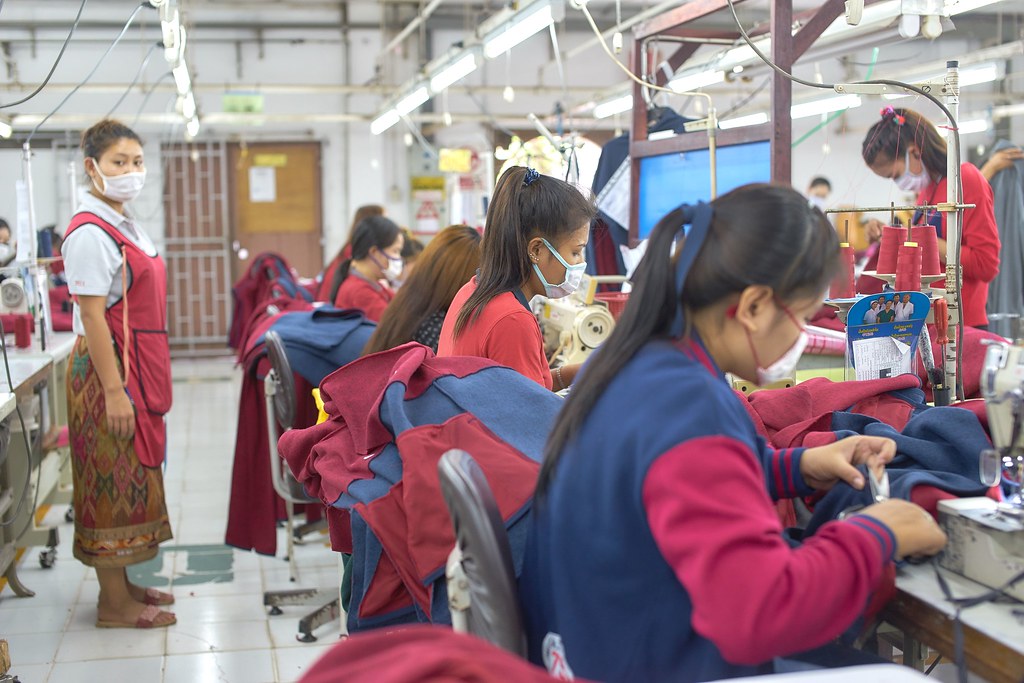
Photo by ILO Asia-Pacific on Flickr.
Environmental cost
Cheap materials usually come at the expense of the environment. Each part of the assembly line from the sourcing of materials to the manufacturing, packaging, delivering and their ultimate disposal has its own flaw. First there is the water usage- it takes approximately 3,000 liters of water to produce 1 cotton shirt and the dyeing process to create fabrics contributes significantly to wastewater production and chemical contamination of waterways. Next the production of fabrics creates microplastics, with some types of fabric creating more plastic by-products than others. Many of these eventually end up in the oceans, where they can accumulate and cause further problems. It has been estimated that up to 35% of oceanic microplastic originated from synthetic clothing.
There is also a significant carbon footprint associated with fabric manufacture, with detrimental impacts on global warming being linked to the industry. Some estimate that the impact is greater than international flights and maritime travel combined, at an estimated 1.2 billion tons of carbon dioxide equivalent per year. Some materials such as viscose, which is made from wood pulp or cellulose, are associated with water and air pollution near the factories that make them. Finally, there’s disposal. Some may be donated or repurposed but most will be dumped or burned. According to the Princeton Student Climate Initiative, 57% of all clothing that is discarded will end up in a landfill, creating more waste and toxic effluents.

Photo by Kevin Walsh on Flickr.
All things considered, fast fashion has more downsides than upsides for both the producers and consumers. This model is unsustainable, unfortunately it can be easy to get caught up as a deal is a deal.
Going into the new year, you can make reducing some of your consumption as part of your resolution by exploring the options available to you. There are many options that include: upcycling, learning to mend and properly take care of garments, thrifting and clothing swaps. Remember, as your granny used to say, cheap thing not good.